 Market Movers
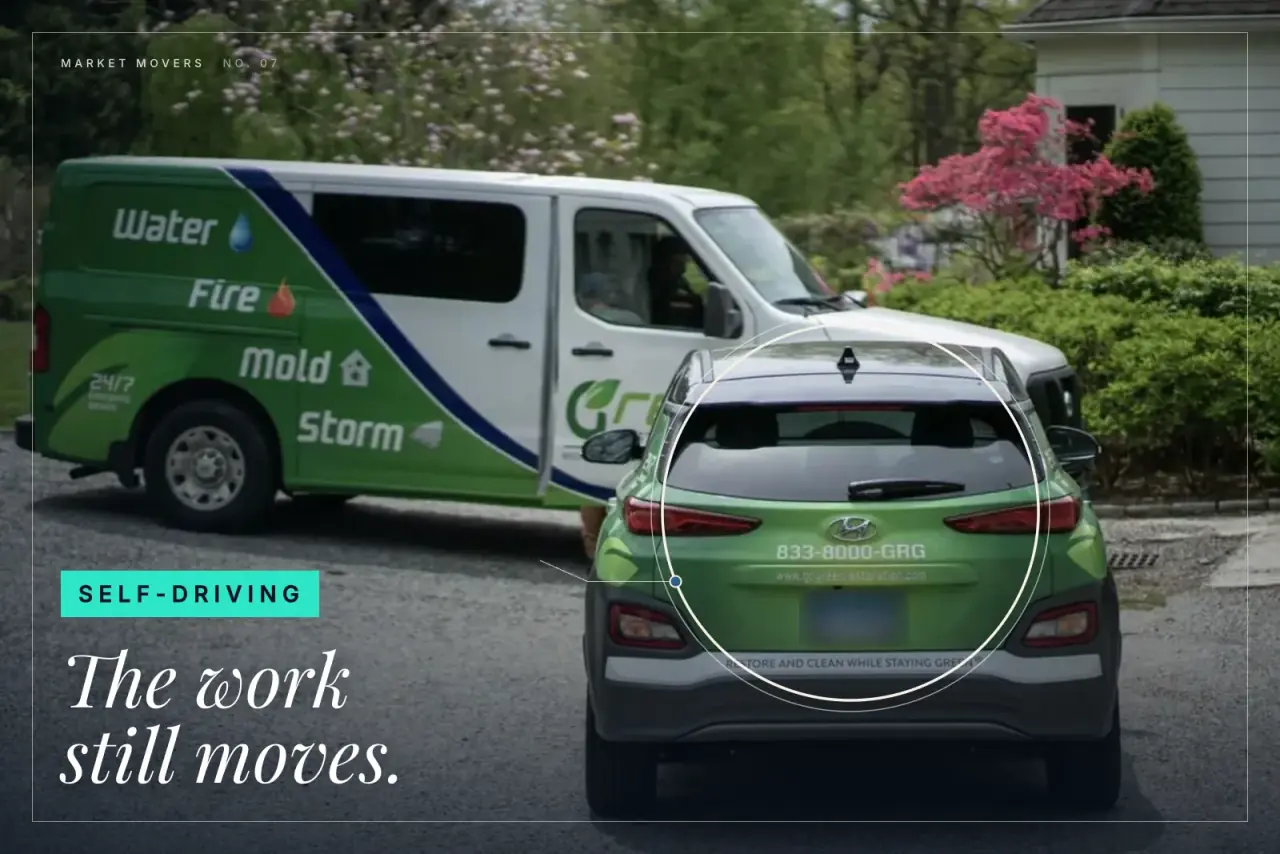
A self-driving company is one where software does the step-by-step work and people steer. The software chases the quote, answers the routine question and builds the report. The owner sets the direction and approves what matters. It is the end goal of everything I build, for my own company and for every business I work with.
What Replit Just Said
On October 26, 2026, Amjad Masad, the CEO of Replit, published "The Rise of the Self-Driving Company." His definition: people set the goals, use judgment and taste, and stay accountable. Agents use the company's knowledge and systems to do the work, with clear rules for when to act and when to ask for approval.
He goes further than most. He predicts that by the end of 2030, every Fortune 500 company will be a self-driving company. Inside Replit, he says engineers nearly tripled their code output in the first half of 2026 while review times and incidents stayed flat. Those are his numbers for his company, not mine.
He also names the piece most companies are missing. He calls it an agent habitat: one place where the software can reach the company's knowledge and tools, within limits the company controls.
The Pushback, and Why It Helps Small Business
On November 3, Paul Roetzer and Mike Kaput of the Marketing AI Institute pushed back on the timeline on The Artificial Intelligence Show. Roetzer agreed with the direction. His view is that fewer than 1% of Fortune 500 companies are scaling AI agents today, and that governance, approvals and change management will take them years.
The things that slow a Fortune 500 company down are exactly what a small company does not have.
I think he is right about big companies, and that is the opening for small ones. An owner-run business has no committee. The owner decides, and the work starts.
Why It Matters More for a Small Business
Replit is a software company full of engineers. Most of the businesses I work with are not. A restoration company, a contractor, a grocer, a real estate office. In those businesses the owner is the router. Every lead, quote, follow-up and question goes through one phone.
That is why the owner answers texts at night, and why the business slows down the week the owner is away. A self-driving company fixes the routing, not the people.
What It Looks Like at Green Restoration
I own Green Restoration, a water, fire and mold restoration company in Connecticut, New York and Massachusetts. I run these systems in my own company first.
- Leads, counted in Jobber: 154 in 2023, and 474 from January to August 2026 at the same location.
- Website chat answers questions and books inspections. It is live today.
- My command deck has a morning brief: what came in, what is stuck and what needs my yes.
- One company brain: jobs, calls, quotes and the inbox in one place. I can ask it which quotes went cold this week.
I still make the calls that matter: prices, hiring and what we take on. The system does more of the chasing, sorting and reminding each month.
Where Green Restoration is today: stop five, Self-Driving. The software does the daily work, and I set the direction and approve what matters. I keep adding loops.
It Is Not Just Restoration
The same road works for any business where the owner is the router. The first stop is different for each one:
- General contractors: every estimate followed up, and job costs you can see without asking the bookkeeper. Contractors ›
- HVAC and roofing: every missed call flagged and followed up, and reviews asked for after every job. HVAC ›
- Real estate: a CRM that fills itself in, and past clients kept warm without a weekend of texting. Real Estate ›
- Offices, manufacturers and shops: one weekly report from the tools you already pay for. Offices and Shops ›
- Grocery and retail: online orders, delivery days and supplier reorders in one place. Grocery and Retail ›
The trade changes. The road does not: routine work first, then one company brain, then a business that brings you the problem before you go looking for it.
The Five Levels
- You Do Everything. It all lives in one head and one phone.
- Assisted. AI helps with single tasks, like drafting an email or a post.
- Cruise Control. Follow-up, review requests and reports run as drafts you approve, then on their own.
- One Company Brain. The CRM, calls, inbox, reviews and books in one place you can ask anything, with clear limits on what the software can do alone.
- Self-Driving. The system spots the problem first, like a cold quote or a drop in calls, and brings you the fix to approve.
Most owners I talk to are at level one or two. The jump that matters is level four. Without one shared picture, every tool works alone and nobody sees the whole business.
How I Get a Business There
One loop at a time. We start with the loop that loses the most money when it slips, usually missed calls or quotes nobody chases. It runs as drafts you approve first, then it switches on. Then the next one. Nothing touches money, customers or prices without a person saying yes, and you own every account.
A self-driving company is the end goal, not a promise for month one. Each step has to earn its place with a before and after you can check yourself. The pieces are on my automation and AI workers pages.
Frequently Asked Questions
What is a self-driving company?
Picture the routine work of a company, like chasing quotes and building reports, handled by software that asks before anything important. Replit first wrote about it in July 2026.
Can a small business really run without the owner?
Not all at once, and nobody should promise it. The goal is to take the owner out of the routine loops one at a time, so the owner's time goes to prices, people and what to take on next.
Where should an owner-run business start?
Ask yourself which slip cost you the most last month. For most of the owners I talk to, it is a missed call or a quote nobody followed up on.